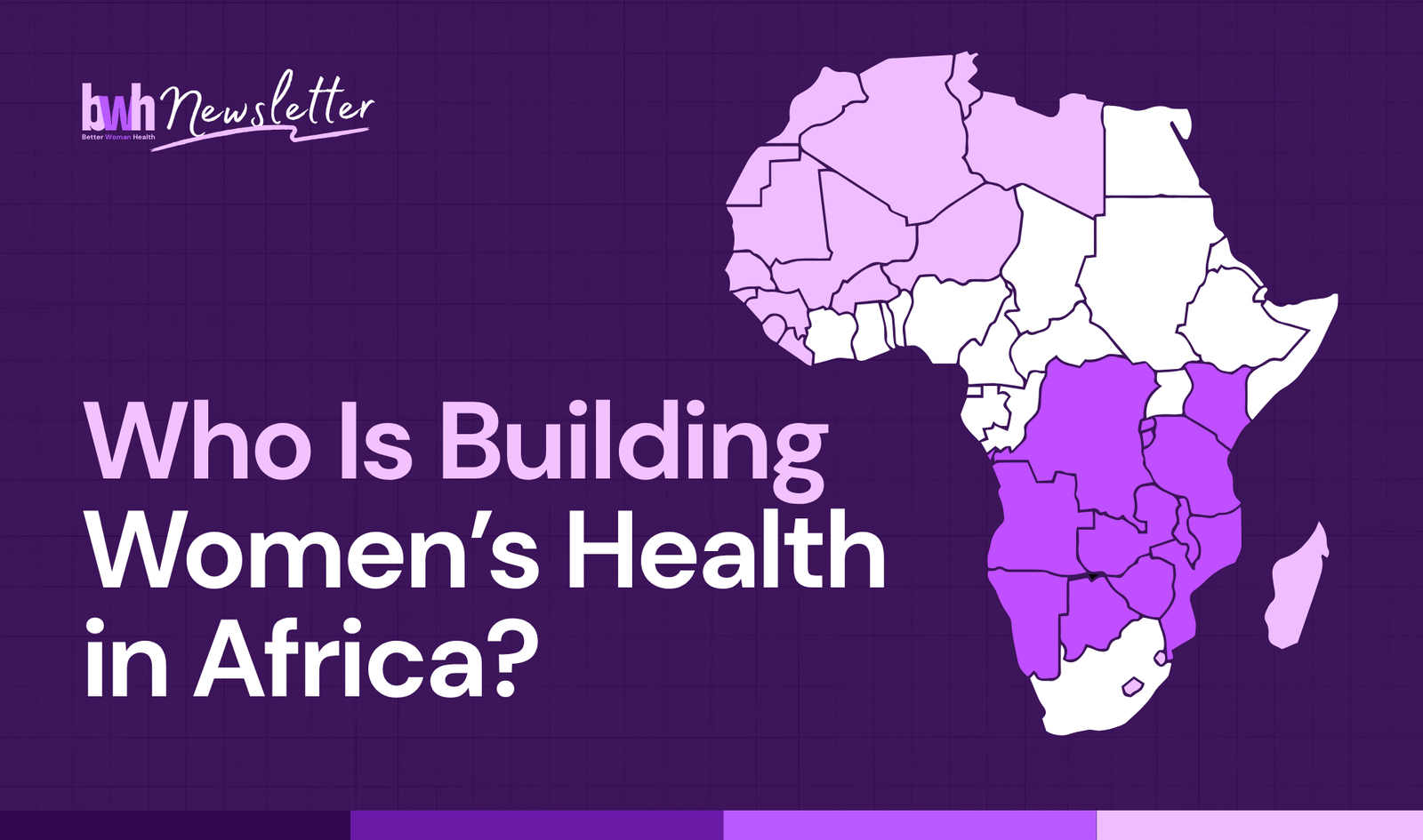
The Missing Piece in Africa’s Women’s Health Innovation Ecosystem
When you look at the FemTech space in Africa from the outside, it can sometimes seem like very little is happening.
When I first entered the space, I was looking at women’s health startups globally. But the more I looked at Africa, the more I realized something interesting:
There was so much happening, with so little connection.
There were founders, clinicians, researchers, investors, and organizations working in women’s health, but many were difficult to find outside the broader health tech ecosystem.
And the numbers reflect this. UNICEF’s first FemTech Ventures call received over 1,100 applications from 85 countries, with more than half coming from Africa.
So the problem isn’t that nothing is happening.
The problem is that it can be difficult to see it as one ecosystem.
The innovation is there. The people are there. But how well are we connected?
Women’s health disappears inside “health tech.”
Women’s health innovation can easily get absorbed into the much broader health technology conversation.
This happens because African health innovation has grown rapidly around health tech and digital health broadly, not around women’s health as its own distinct space. A founder or clinician building specifically for women’s health often finds themselves at a general digital health event. An investor interested in women’s health is usually looking across a much broader healthcare portfolio.
Everyone is building. Not everyone knows who else is building.
Why this is important
When an ecosystem isn’t connected, a few things happen quietly, without anyone fully noticing.
Teams can spend months figuring out problems that another team has already solved, simply because they didn’t know they could learn from them. Clinical expertise that could shape a product early is not brought in until much later, sometimes too late to meaningfully change direction. Investors pass on opportunities they never actually saw. Knowledge and lessons that could save someone months of trial and error stay locked inside individual teams instead of strengthening the wider space.
None of this is because people aren’t willing to collaborate. It’s because there’s rarely been a structure that makes collaboration the easy, obvious option.
We need to see the ecosystem we already have
We don’t have to wait until the African women’s health ecosystem is “big enough” before connecting it. We need to start mapping who is already here. Who are the founders? Who is funding women’s health? Which clinicians are working with innovators? Which researchers are generating evidence? Which accelerators and organizations are supporting relevant companies?
There are already examples of others working on this visibility gap, and these efforts matter because visibility creates possibility. You cannot collaborate with someone you don’t know exists.
I’ve paid close attention to this specific gap, not just the individual products being built, but the connections, or lack of them, between the people building them. Conversations with founders, clinicians, researchers, and investors across different markets keep surfacing the same theme: people want to find each other. They just don’t have an easy way to do it.
That’s the problem worth solving right now. A way for the people already doing this work to actually see each other.
Starting from Nigeria
This is why Better Woman Health is evolving into an ecosystem-building platform: to help the people building in women’s health find each other, share what they know, and build together.
We’re starting with something simple: a directory of people and organizations working in women’s health across Africa, starting with Nigeria.
If you’re a founder, clinician, researcher, or investor working in the space, this is a way to be seen and to find others doing similar work.
It’s a small first step, but the goal is bigger: a connected African women’s health ecosystem that knows itself, rather than a collection of people building separately.
If you have a women’s health company or organization operating in Nigeria, you can fill out the Women’s Health Innovation Directory to be included.
If you have any questions or need clarification, you can reply to this email or reach me at hello@ayomide.me
We’re starting in Nigeria, but we’re building with Africa in mind.
Better Woman Health is published weekly.
Subscribe at betterwomanhealth.com to get it directly in your inbox.
Clinical Credibility Toolkit
The Clinical Credibility Toolkit is a free resource designed for FemTech founders building digital tools for women’s health.
It includes the Clinical Credibility Scorecard, a 28-question assessment that helps you identify gaps in your clinical foundation, evidence strategy, safety architecture, and investor readiness, and the Red Flag Detection Checklist, a 25-question assessment that tells you whether your symptom-tracking app can actually detect and act on medical red flags, not just log them.
If you are preparing to pitch, pursuing healthcare partnerships, or simply want to know where your product stands clinically, start here.
Access the toolkit → app.ayomide.me
Thanks for reading. See you soon!
Dr. Ayomide O.
Clinical Strategist & African Market Advisor
Find me on LinkedIn or Book a 1:1 Call